
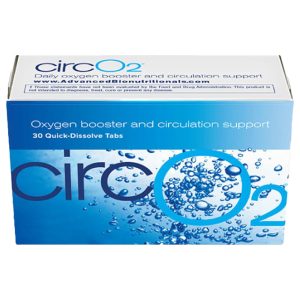
 Your Circulation May Be Part of the Story
Have you noticed that you don’t have quite the energy or stamina you once did? Perhaps you get tired more easily. Your hands and feet often feel cold. Exercise seems harder than it used to. Or you simply feel that you’re not operating at the same level you were a few years ago. As we get older, it’s natural to pay more attention to energy, stamina, cardiovascular health and circulation. But there’s one molecule in the body that deserves more attention than it usually gets: Nitric oxide.
Why Nitric Oxide Matters
Nitric oxide is a naturally occurring signaling molecule involved in the regulation of blood vessels and blood flow. One of its important roles is helping blood vessels relax, which is part of the body’s normal system for regulating circulation. That’s why researchers have become interested in nutritional strategies that may support the body’s ability to produce nitric oxide. And this is where ingredients such as L-citrulline and dietary nitrate come into the picture. Research suggests that L-citrulline can increase circulating L-arginine and markers associated with nitric oxide production. However, studies don’t consistently show that this automatically translates into improved blood flow or physical performance in everyone.
So the goal shouldn’t be to look for a miracle “nitric oxide booster.” Instead, it’s about understanding which nutritional ingredients may help support the body’s natural pathways.
The Problem: Circulation Can Become More Important With Age
As we age, maintaining healthy vascular function becomes increasingly important. You may notice the effects in everyday life. Perhaps you don’t recover from exercise as quickly. Maybe you feel less energetic during the afternoon. You may find it harder to maintain the same level of stamina you had when you were younger. These experiences can have many causes, of course. Sleep, diet, fitness, stress, medications and underlying health conditions can all play a role. But maintaining healthy circulation is also an important part of overall cardiovascular wellbeing. That’s why supplements for better circulation have become an area of growing interest.
The Interesting Connection Between Nitric Oxide and Blood Flow
Your body naturally produces nitric oxide through several pathways. One involves the amino acid L-arginine, while another involves dietary nitrate, which can ultimately contribute to nitric oxide production. L-citrulline is particularly interesting because the body can convert it into L-arginine, providing another route for supporting nitric oxide synthesis. Research has consistently found that L-citrulline supplementation can increase circulating L-citrulline and L-arginine, although the effects on actual vascular function vary between studies. That makes L-citrulline one of the more interesting ingredients to look for when researching natural ways to boost nitric oxide.
L-Citrulline: Supporting the Body’s Nitric Oxide Pathway
L-citrulline is an amino acid found naturally in foods such as watermelon. Unlike taking nitric oxide itself, supplementation with L-citrulline provides the body with a precursor that can be converted into L-arginine. This matters because L-arginine is directly involved in the enzymatic production of nitric oxide. Research has found that L-citrulline supplementation can increase nitric oxide-related metabolites and L-arginine availability. Some studies have also reported potential benefits relating to exercise performance and recovery, although the evidence isn’t uniform. So if you’re researching how to improve blood circulation naturally, L-citrulline is certainly an ingredient worth understanding.
Beetroot: A Natural Source of Nitrate
The second major ingredient is beetroot. Beetroot is naturally rich in inorganic nitrate. Once consumed, dietary nitrate can enter the nitrate-nitrite-nitric oxide pathway, which is one of the body’s nitric oxide-producing pathways. This is one reason beetroot has attracted so much attention from researchers and athletes. Several clinical studies and reviews have investigated beetroot juice and nitrate supplementation in relation to blood pressure and vascular function. Some have reported reductions in systolic blood pressure, although results vary and the evidence should not be interpreted as proof that a beetroot-containing supplement can treat hypertension. In other words, beetroot may provide nutritional support for the body’s nitric oxide pathway—but it shouldn’t be considered a replacement for prescribed treatment.
Hawthorn Berry: A Traditional Cardiovascular Ingredient
The formula also contains hawthorn berry. Hawthorn has a long history of traditional use, particularly in connection with cardiovascular health, and researchers have investigated its effects on vascular and cardiovascular function. Recent reviews suggest that hawthorn contains bioactive compounds such as flavonoids and proanthocyanidins that may influence vascular function. However, studies of hawthorn supplements have used different extracts, doses and formulations, making it difficult to generalize results to every product containing hawthorn. That’s an important distinction. The research on an individual ingredient doesn’t automatically prove that a particular supplement will produce the same result. But it does explain why hawthorn continues to attract interest as a botanical ingredient for cardiovascular support.
Vitamin C, Vitamin B12 and Magnesium Add Another Layer
The formula also contains several familiar nutrients, including vitamin C, vitamin B12 and magnesium. These aren’t nitric oxide ingredients in the same sense as nitrate or L-citrulline. Instead, they provide nutritional support for other aspects of normal body function. Vitamin C contributes to normal antioxidant protection, while vitamin B12 is important for normal neurological function and energy-yielding metabolism. Magnesium contributes to normal muscle and nerve function and is involved in numerous biochemical processes. This broader nutritional approach is worth considering when looking at a circulation supplement. Rather than relying on one ingredient, the formula combines several nutrients and botanical compounds that work through different biological pathways.
What About Energy, Stamina and Exercise?
This is where nitric oxide often gets particularly interesting. Because nitric oxide is involved in vascular regulation and blood flow, researchers have investigated whether ingredients that influence nitric oxide production can also affect exercise performance. L-citrulline has been studied extensively in this area. Some research has reported improvements in aspects of exercise performance and recovery, while other studies have found little or no meaningful effect. So it would be misleading to promise that a nitric oxide supplement will automatically give you more energy or dramatically improve endurance. But if your goal is to boost energy and circulation, supporting good nutrition, regular physical activity, adequate sleep and healthy vascular function makes considerably more sense than relying on a single ingredient.
Could Supporting Nitric Oxide Be Worth Considering?
If you’re looking for natural ways to boost nitric oxide, the first place to start is your overall lifestyle. Regular exercise, a diet rich in vegetables, adequate sleep and maintaining a healthy body weight all matter. Dietary sources of nitrate—including leafy green vegetables and beetroot—can also contribute to the nitrate-nitrite-nitric oxide pathway. A supplement can be considered as an additional nutritional option, particularly for someone who wants a convenient combination of ingredients. But it shouldn’t be viewed as a treatment for high blood pressure, cardiovascular disease, erectile dysfunction, fatigue or any other medical condition. And if you’re taking medication—particularly medication that affects blood pressure or cardiovascular function—it’s important to speak with a healthcare professional before using a nitric oxide supplement.
Is a Nitric Oxide Supplement Right for You?
The real question isn’t whether nitric oxide is a “miracle molecule.” It isn’t. The more useful question is whether providing your body with ingredients involved in nitric oxide production and vascular function makes sense as part of your overall approach to healthy aging. The combination of beetroot, L-citrulline, hawthorn berry, vitamin C, vitamin B12 and magnesium provides several nutritional and botanical components that have been investigated individually for different aspects of cardiovascular, vascular or general health. And that’s what makes the formula worth a closer look.
Want to Learn More?
If you’re researching the best nitric oxide booster, comparing top-rated circulation supplements, or simply looking for a convenient way to support your body’s natural nitric oxide pathway, take a closer look at the ingredients and formulation behind this approach. Click below to learn more about the formula, its ingredients and how it is designed to support healthy circulation and nitric oxide production.